Buy meanings.eu ?
We are moving the project
meanings.eu .
Are you interested in purchasing the domain
meanings.eu ?
domain@kv-gmbh.de · 0541-91531010
Buy meanings.eu ?
What is distributive justice?
Distributive justice is a concept that concerns the fair distribution of resources, opportunities, and benefits within a society. It is based on the idea that everyone should have access to a fair share of the resources and opportunities available, and that the distribution should be based on principles of fairness and equality. This concept is often used to address issues of inequality and social justice, and it is a key consideration in political and ethical discussions about how to create a more just and equitable society. **
Can you prove the distributive law?
Yes, the distributive law states that a(b + c) = ab + ac. To prove this, we can start by expanding the left side of the equation: a(b + c) = ab + ac. Then, we can distribute the 'a' to both terms inside the parentheses to get ab + ac, which matches the right side of the equation. Therefore, we have proven the distributive law. **

Similar search terms for Distributive
Top-Angebote
Products related to Distributive:
-
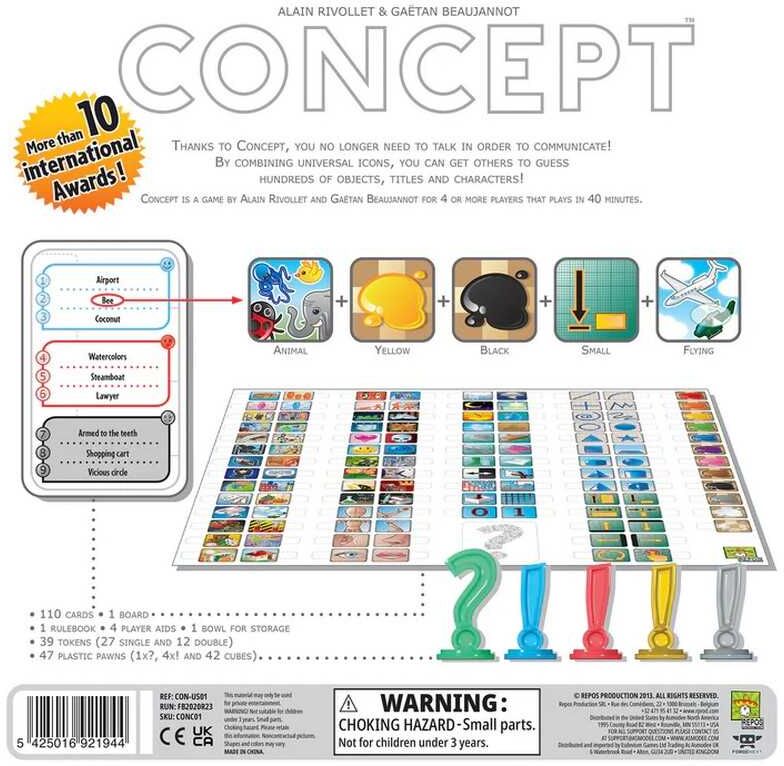
Concept Board Game by Repos for 2-4 Players, Ages 10+, Encourages Observation and InterpretationConcept Board Game is a game where players communicate ideas without saying a word. The game board features illustrated icons representing various concepts, such as colors, objects, places, animals, and more. Players use these icons to build visual clues for a chosen concept, while the other players work together to identify what they are conveying. The game encourages observation, interpretation, and imaginative thinking, making it suitable for family and social game sessions. To play, choose a concept, use the board's icons to create a visual clue, and invite the group to interpret the clues and identify the answer. Concept is designed to be easy to learn and offers a flexible scoring system, allowing the group to focus on the shared enjoyment of solving and presenting clues.24,59 £*Shipping: 1,99 £Secure redirect to the provider
-
Little Secret - Social Party Game for Lively Group Play with Clues, Interpretation and Deduction - Exploding KittensLittle Secret is a social party game designed for lively group play. Players use clues, interpretation, and deduction to work out what is being suggested while keeping their own intentions concealed. The game encourages creative thinking and conversation, making it perfect for engaging evenings with friends and family. Each round offers opportunities to misdirect other players, make surprising connections, and test how well the group understands one another. Little Secret is a compact game that's easy to store, making it a great addition to any game collection. It's suitable for players who enjoy accessible party games built around communication, deduction, and discussion.16,99 £*Shipping: 1,99 £Secure redirect to the provider
-
Dixit 2021 Refresh - Imaginative Picture Interpretation Game for Family and Friends, Ages 10+, 84 Illustrated Cards, Large-Format, LibelludDixit 2021 Refresh is an evocative picture interpretation game for family and friends. Each round, one player becomes the storyteller and selects an illustrated card from their hand, offering a clue inspired by its mysterious scene. The other players choose a card from their own hand that they feel best matches the clue. The cards are revealed together, and players try to identify the storyteller’s original image without making the answer too obvious. Points are awarded for thoughtful clues and perceptive guesses. This refresh features 84 dreamlike, text-free illustrations on large-format cards, encouraging open-ended storytelling and imaginative discussion. Its accessible gameplay makes it suitable for mixed groups and players who enjoy creative, language-light challenges.22,49 £*Shipping: 1,99 £Secure redirect to the provider
-
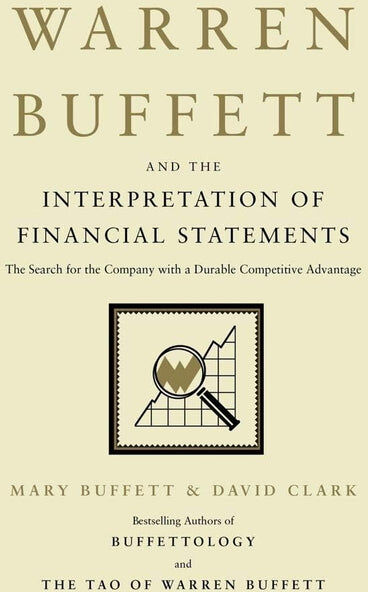
Simon & Schuster Warren Buffett and the Interpretation of Financial Statements by Mary Buffett & David Clark - Paperback - Investing & Business Finance GuideA practical guide to reading company accounts, written by Mary Buffett and David Clark. This book breaks down balance sheets, income statements, and cash flow reports into simple, actionable lessons, helping new and experienced investors alike to strip away financial jargon and identify a company with a lasting competitive advantage.3,99 £*Shipping: 2,99 £Secure redirect to the provider


-
Can you prove the distributive property?
Yes, the distributive property can be proven using algebraic manipulation. The distributive property states that a(b + c) = ab + ac. To prove this, we can start with the left-hand side of the equation, a(b + c), and use the distributive property to expand it to ab + ac. This can be done by multiplying a by each term inside the parentheses and then adding the results together. Therefore, by showing that a(b + c) is equal to ab + ac, we have proven the distributive property. **
-
What is fairer: distributive or retributive justice?
Both distributive and retributive justice are important aspects of a fair society. Distributive justice focuses on the fair distribution of resources and opportunities among individuals, ensuring that everyone has access to what they need. On the other hand, retributive justice is concerned with holding individuals accountable for their actions and ensuring that they face consequences for any harm they have caused. Ultimately, both forms of justice are necessary for a fair society, as they address different aspects of fairness and equality. **
-
What is the Distributive Property used for?
The Distributive Property is used to simplify expressions by distributing a number or variable to all terms inside parentheses. It allows us to combine like terms and perform operations more efficiently. This property is commonly used in algebra to expand and simplify equations. **
-
How do you apply the distributive property?
To apply the distributive property, you need to multiply each term inside the parentheses by the term outside the parentheses. For example, if you have the expression 3(2x + 4), you would distribute the 3 to both terms inside the parentheses to get 6x + 12. This allows you to simplify expressions and solve equations more easily by distributing the terms. The distributive property is a fundamental concept in algebra that helps in breaking down complex expressions into simpler forms. **

What is an example of distributive justice?
An example of distributive justice is the fair distribution of resources in society, such as income, wealth, and opportunities. This means ensuring that everyone has access to basic necessities like food, shelter, education, and healthcare. Distributive justice aims to reduce inequalities and promote a more equitable distribution of resources to create a more just society. **
How can distributive justice be explained simply?
Distributive justice is the concept of fairness in the distribution of resources and opportunities within a society. It involves ensuring that everyone has access to the basic necessities of life, such as food, shelter, healthcare, and education, and that the distribution of wealth and income is equitable. This means that resources and opportunities should be allocated in a way that is fair and just, taking into account the needs and contributions of individuals and groups within the society. Ultimately, distributive justice aims to create a more equal and just society by addressing inequalities and ensuring that everyone has a fair chance to thrive. **
Top-Angebote
Products related to Distributive:
-
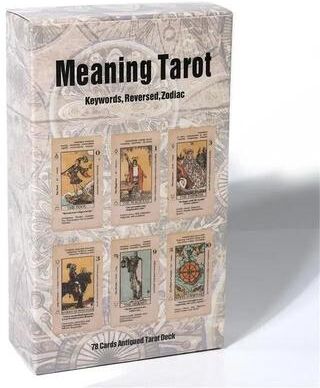
Uplifted Finds Beginner Tarot Deck With Keywords & Meanings Antiqued Learning Tarot 78 Card Set Beginner Tarot Deck With Keywords & Meanings Antiqued Learning Tarot 78 Card SetCommand ultimate spiritual confidence with the Beginner Learning Tarot System, a highperformance metaphysical solution specifically engineered to act as a comprehensive tool for elite organization and superior technical ergonomics. Built with a...44,97 $*Shipping: 0,00 $Secure redirect to the provider
-
Dixit Kids, Cooperative Image Interpretation Game for Family Play, 84 Illustrated Cards, LibelludDixit Kids is a cooperative image interpretation game designed for family play. Players work together to identify the Chief Postman's image from a selection of beautifully illustrated cards, while inviting rabbits to the Grand Party before time runs out. The game features artwork from four artists and offers a way to explore emotions, ideas, and storytelling together. Suitable for children and families looking for an imaginative tabletop activity. What's included: 84 original illustrated cards, cooperative gameplay, and cards compatible with Dixit Universe games.19,29 £*Shipping: 1,99 £Secure redirect to the provider
-
Concept Board Game by Repos for 2-4 Players, Ages 10+, Encourages Observation and InterpretationConcept Board Game is a game where players communicate ideas without saying a word. The game board features illustrated icons representing various concepts, such as colors, objects, places, animals, and more. Players use these icons to build visual clues for a chosen concept, while the other players work together to identify what they are conveying. The game encourages observation, interpretation, and imaginative thinking, making it suitable for family and social game sessions. To play, choose a concept, use the board's icons to create a visual clue, and invite the group to interpret the clues and identify the answer. Concept is designed to be easy to learn and offers a flexible scoring system, allowing the group to focus on the shared enjoyment of solving and presenting clues.24,59 £*Shipping: 1,99 £Secure redirect to the provider
-
Little Secret - Social Party Game for Lively Group Play with Clues, Interpretation and Deduction - Exploding KittensLittle Secret is a social party game designed for lively group play. Players use clues, interpretation, and deduction to work out what is being suggested while keeping their own intentions concealed. The game encourages creative thinking and conversation, making it perfect for engaging evenings with friends and family. Each round offers opportunities to misdirect other players, make surprising connections, and test how well the group understands one another. Little Secret is a compact game that's easy to store, making it a great addition to any game collection. It's suitable for players who enjoy accessible party games built around communication, deduction, and discussion.16,99 £*Shipping: 1,99 £Secure redirect to the provider
-
What is distributive justice?
Distributive justice is a concept that concerns the fair distribution of resources, opportunities, and benefits within a society. It is based on the idea that everyone should have access to a fair share of the resources and opportunities available, and that the distribution should be based on principles of fairness and equality. This concept is often used to address issues of inequality and social justice, and it is a key consideration in political and ethical discussions about how to create a more just and equitable society. **
-
Can you prove the distributive law?
Yes, the distributive law states that a(b + c) = ab + ac. To prove this, we can start by expanding the left side of the equation: a(b + c) = ab + ac. Then, we can distribute the 'a' to both terms inside the parentheses to get ab + ac, which matches the right side of the equation. Therefore, we have proven the distributive law. **
-
Can you prove the distributive property?
Yes, the distributive property can be proven using algebraic manipulation. The distributive property states that a(b + c) = ab + ac. To prove this, we can start with the left-hand side of the equation, a(b + c), and use the distributive property to expand it to ab + ac. This can be done by multiplying a by each term inside the parentheses and then adding the results together. Therefore, by showing that a(b + c) is equal to ab + ac, we have proven the distributive property. **
-
What is fairer: distributive or retributive justice?
Both distributive and retributive justice are important aspects of a fair society. Distributive justice focuses on the fair distribution of resources and opportunities among individuals, ensuring that everyone has access to what they need. On the other hand, retributive justice is concerned with holding individuals accountable for their actions and ensuring that they face consequences for any harm they have caused. Ultimately, both forms of justice are necessary for a fair society, as they address different aspects of fairness and equality. **
Similar search terms for Distributive
-
Dixit 2021 Refresh - Imaginative Picture Interpretation Game for Family and Friends, Ages 10+, 84 Illustrated Cards, Large-Format, LibelludDixit 2021 Refresh is an evocative picture interpretation game for family and friends. Each round, one player becomes the storyteller and selects an illustrated card from their hand, offering a clue inspired by its mysterious scene. The other players choose a card from their own hand that they feel best matches the clue. The cards are revealed together, and players try to identify the storyteller’s original image without making the answer too obvious. Points are awarded for thoughtful clues and perceptive guesses. This refresh features 84 dreamlike, text-free illustrations on large-format cards, encouraging open-ended storytelling and imaginative discussion. Its accessible gameplay makes it suitable for mixed groups and players who enjoy creative, language-light challenges.22,49 £*Shipping: 1,99 £Secure redirect to the provider
-
Simon & Schuster Warren Buffett and the Interpretation of Financial Statements by Mary Buffett & David Clark - Paperback - Investing & Business Finance GuideA practical guide to reading company accounts, written by Mary Buffett and David Clark. This book breaks down balance sheets, income statements, and cash flow reports into simple, actionable lessons, helping new and experienced investors alike to strip away financial jargon and identify a company with a lasting competitive advantage.3,99 £*Shipping: 2,99 £Secure redirect to the provider
-
Simon and Schuster UK Warren Buffett and the Interpretation of Financial Statements: The Search for the Company with a Durable Competitive AdvantageWith an insider's view of the mind of the master, Mary Buffett and David Clark have written a simple guide for reading financial statements from Buffett's successful perspective. They clearly outline Warren Buffett's strategies in a way that will appeal to newcomers and seasoned Buffettologists alike. Inspired by the seminal work of Buffett's mentor, Benjamin Graham, this book presents Buffett's interpretation of financial statements with anecdotes and quotes from the master investor himself. Destined to become a classic in the world of investment books, Warren Buffett and the Interpretation of Financial Statements is the perfect companion volume to The New Buffettology and The Tao of Warren Buffett.4,95 £*Shipping: 1,99 £Secure redirect to the provider
-
Uplift Treasures Dad Definition Acrylic Decorative Sign Dad Definition Acrylic Decorative SignProduct Description Celebrate everything that makes him special with this Dad Definition acrylic decorative sign. Featuring a heartfelt definitionstyle message, its a meaningful thank you, birthday, or Christmas gift from kids or a wife that adds...82,97 $*Shipping: 0,00 $Secure redirect to the provider
-
What is the Distributive Property used for?
The Distributive Property is used to simplify expressions by distributing a number or variable to all terms inside parentheses. It allows us to combine like terms and perform operations more efficiently. This property is commonly used in algebra to expand and simplify equations. **
-
How do you apply the distributive property?
To apply the distributive property, you need to multiply each term inside the parentheses by the term outside the parentheses. For example, if you have the expression 3(2x + 4), you would distribute the 3 to both terms inside the parentheses to get 6x + 12. This allows you to simplify expressions and solve equations more easily by distributing the terms. The distributive property is a fundamental concept in algebra that helps in breaking down complex expressions into simpler forms. **
-
What is an example of distributive justice?
An example of distributive justice is the fair distribution of resources in society, such as income, wealth, and opportunities. This means ensuring that everyone has access to basic necessities like food, shelter, education, and healthcare. Distributive justice aims to reduce inequalities and promote a more equitable distribution of resources to create a more just society. **
-
How can distributive justice be explained simply?
Distributive justice is the concept of fairness in the distribution of resources and opportunities within a society. It involves ensuring that everyone has access to the basic necessities of life, such as food, shelter, healthcare, and education, and that the distribution of wealth and income is equitable. This means that resources and opportunities should be allocated in a way that is fair and just, taking into account the needs and contributions of individuals and groups within the society. Ultimately, distributive justice aims to create a more equal and just society by addressing inequalities and ensuring that everyone has a fair chance to thrive. **
* All prices are inclusive of VAT and, if applicable, plus shipping costs. The offer information is based on the details provided by the respective shop and is updated through automated processes. Real-time updates do not occur, so deviations can occur in individual cases. ** Note: Parts of this content were created by AI.